


Chile vs Argentina Patagonia: Which Side Should You Choose?
Patagonia is one of those regions that seem to belong more to imagination than to any map: glaciers that calve with a roar heard for miles, granite towers piercing the sky, endless steppes roamed by guanacos and condors, and a silence only the wind dares to interrupt. But before you can even picture the trip, the first big question arises: Chile vs Argentina Patagonia, which side should you choose?
Technically, Patagonia isn’t a country or a single administrative region, but a vast geographic territory stretching across the southern tip of South America, shared between Chile and Argentina. The Andes Mountain range acts as a natural border. On either side of that mountainous spine, profoundly different landscapes unfold, while the Chilean side leans toward fjords, temperate rainforests, and jagged peaks, the Argentine side opens into vast steppes, towering glaciers, and lakes of an almost unreal turquoise.
This divide isn’t just geographic — it’s cultural too: two countries, two culinary traditions, two ways of welcoming travelers, and two equally fascinating versions of the same wild region.
Is it worth visiting both sides? In most cases, yes. Many travelers end up combining Chile and Argentina in a single itinerary, since the distances between the key points on both sides are reasonable and the border crossings are well established. That said, if time is limited, choosing just one side lets you go deeper into each experience without the logistics of crossing the border.
Which side is better for your type of traveler? That depends entirely on what you’re looking for: landscapes, physical activity, wildlife, cuisine, or a specific type of luxury accommodation. In this complete Patagonia travel guide, we explore both sides in depth so you can decide with all the information in hand.
Quick Comparison
| Feature | Chile | Argentina |
|---|---|---|
| Landscapes | Jagged mountains, fjords, forests | Steppes, glaciers, turquoise lakes |
| Hiking | Torres del Paine, technical circuits | Fitz Roy, accessible trails |
| Wildlife | Pumas, guanacos, condors | Guanacos, condors, steppe birds |
| Luxury Lodges | High concentration, signature design | Historic estancias, expanding |
| Scenic Drives | Carretera Austral | Ruta 40 |
| Glaciers | Less prominent | Perito Moreno Glacier, Ice Field |
| Photography | Rock formations, dramatic light | Blue glaciers, open skies |
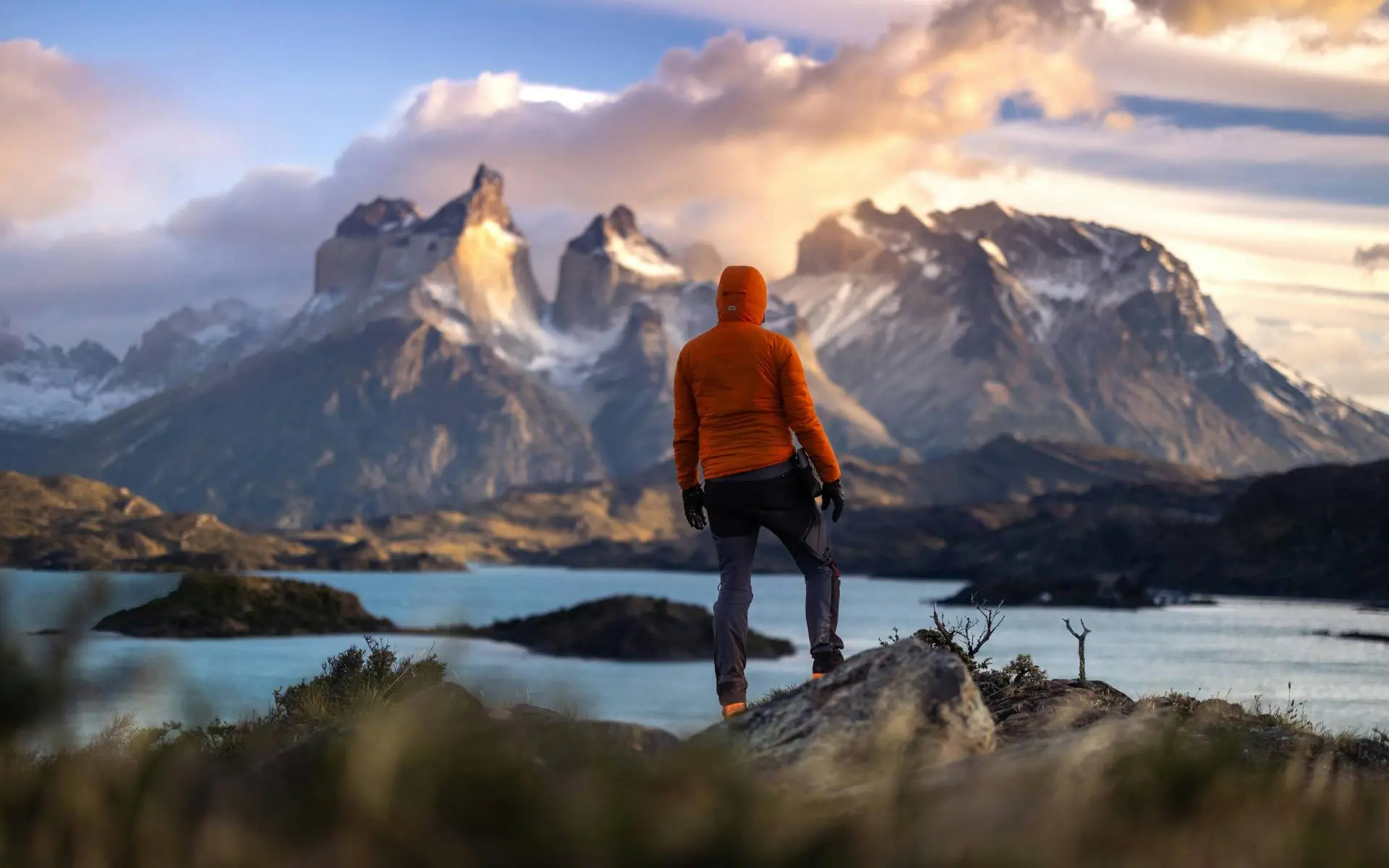
Why Choose Chilean Patagonia?
Torres del Paine National Park
Torres del Paine is, without question, the undisputed icon of Chilean Patagonia. Its three granite towers, visible from miles away, have become one of the most recognizable images in South America. The park combines turquoise lakes, hanging glaciers, lenga forests, and a trail network ranging from short walks to the demanding W Circuit or the full O Circuit.
Luxury Lodges in Chilean Patagonia
The offer of luxury lodges in Chile has become one of the most sophisticated in South America, with properties designed specifically to blend into the landscape:
- Explora Patagonia: a pioneer of luxury travel in the region, with architecture that speaks directly to the park's landscape and an excursion program included in the rate.
- Tierra Patagonia: contemporary design facing Lake Sarmiento, with large windows that turn every room into a private viewpoint.
- Awasi Patagonia: the only lodge in the region with independent cabins, each assigned a private guide and an exclusive vehicle for the entire stay.
Best Experiences
| Experience | Description | Best Season | Duration | Physical Level | Exclusivity | Ideal For |
|---|---|---|---|---|---|---|
| Private hiking | Exclusively guided circuits | Oct - Apr | 1 day to 8 days | Medium - High | High | Adventurers, photographers |
| Horseback riding | Rides through estancias | Oct - Apr | Half day | Low - Medium | Medium | Families, couples |
| Scenic flight | Flyover of the Paine massif | Year-round (weather permitting) | 30-60 min | Low | High | Photographers, luxury travelers |
| Iceberg kayaking | Paddling near Grey Glacier | Oct - Apr | Half day | Medium | Medium | Adventurers |
| Puma tracking | Guided tracking with specialists | May - Sep | 1-3 days | Medium | High | Wildlife lovers |
Argentine Patagonia: Glaciers and Wildlife
Los Glaciares National Park
On the other side of the Andes, Los Glaciares is the great protagonist of Argentine Patagonia: a park that combines the Southern Patagonian Ice Field, some of the world’s most technical mountaineering peaks — such as Fitz Roy and Cerro Torre — and the town of El Chaltén, considered the national trekking capital.
Perito Moreno Glacier
No icon of Patagonia wildlife and glacial scenery is as recognized as the Perito Moreno. Unlike most glaciers on the planet, this one continues to advance, and its calvings — blocks of ice the size of buildings crashing into Lake Argentino — are among the most impressive natural spectacles in South America.
Luxury Stays
- Eolo Patagonia Spirit (El Calafate): contemporary-design estancia set in the middle of the steppe, with 360-degree panoramic views.
- Estancia Cristina (Lake Argentino): a historic property accessible only by boat, surrounded by glaciers and mountains.
- Los Cauquenes Resort & Spa (El Calafate): facing Lake Argentino, with a spa and a top-tier culinary offering.

Best Experiences
| Experience | Description | Best Season | Duration | Physical Level | Exclusivity | Ideal For |
|---|---|---|---|---|---|---|
| Glacier navigation | Boat tour in front of Perito Moreno | Year-round | Half day | Low | Medium | Families, photographers |
| Ice trekking | Crampon walk on the glacier | Oct - Apr | Half day | High | Medium | Adventurers |
| Private estancias | Immersion in Patagonian rural life | Year-round | 1-3 days | Low - Medium | High | Couples, luxury travelers |
| Wine tasting | Pairing with regional products | Year-round | 2-3 hours | Low | Medium | Food and wine lovers |
| Fly fishing | Sport fishing in rivers and lakes | Nov - Apr | 1 day | Medium | High | Anglers, active travelers |
Chile vs Argentina: Side-by-Side Comparison
Landscapes
Chile offers a more vertical, dramatic landscape: jagged mountains, fjords, and dense forests that merge with the Andes. Argentina, on the other hand, unfolds into open horizons, endless steppes, and glaciers that dominate the scenery with their sheer scale. Neither is objectively “better” — they’re simply different aesthetics.
Luxury Accommodation
Chile has an edge in the concentration and architectural design of its luxury lodges, with properties built from the ground up to blend into the park’s landscape. Argentina answers with historic estancias full of character, many carrying generations of ranching tradition.
Wildlife
For wildlife spotting, both sides compete closely. Chile has a stronger reputation for puma sightings, especially in the northern sector of Torres del Paine. Argentina offers more diverse Patagonia wildlife, including steppe birds and fauna directly tied to glacial environments.
Adventure Activities
When it comes to hiking in Patagonia, Chile offers the technical W and O circuits at Torres del Paine. At the same time, Argentina provides direct, free access to trails around El Chaltén, ideal for those seeking world-class trekking without necessarily booking a multi-day guided circuit.
Food & Wine
Argentina has a clear edge on the wine front, with a well-established wine culture that’s accessible even in Patagonia. Chile isn’t far behind, with a culinary scene that blends land and sea ingredients into signature dishes within the lodges.
Road Trips
The Carretera Austral, in Chile, is a scenic route through forests, fjords, and glaciers, ideal for multi-day road trips. In Argentina, the legendary Ruta 40 crosses the Patagonian steppe from north to south, offering open landscapes and a sense of immensity that’s hard to match.
Photography
Chile favors photography of dramatic rock formations and shifting light over the granite towers. Argentina offers intensely blue glaciers and clear skies, ideal for capturing the sheer scale of the landscape.
Accessibility
Puerto Natales, the gateway to Torres del Paine, and El Calafate, the gateway to Los Glaciares, are connected by well-established overland routes and frequent regional flights, making it easy to combine both destinations in a single trip.
Cost
Rather than talking about “cheap” or “expensive,” the right conversation is about value. Argentina has historically been more accessible in terms of the overall cost of living due to the exchange rate, though luxury lodges in both countries reach comparable price points. Chile, for its part, has higher national park entry fees, but compensates with very high-level infrastructure and hotel design.
Best Time to Visit
The best time to visit Patagonia, on either side, is during the austral spring and summer, between October and April, when days are longer, and the weather is more stable for trekking. Outside this window, many tourism services scale back operations, though the austral winter offers spectacular snow-covered landscapes for more adventurous travelers.

Which Patagonia Is Best for You?
| Traveler | Recommended Side |
|---|---|
| Luxury Travelers | Chile |
| Adventure Travelers | Chile |
| Photographers | Both |
| Wildlife Lovers | Argentina |
| Luxury Honeymoon | Chile |
| Families | Argentina |
Can You Visit Both Chilean and Argentine Patagonia?
Yes, and it’s one of the most popular combinations among those seeking complete luxury Patagonia tours. The most common route connects Puerto Natales (Chile) with El Calafate (Argentina) via a land crossing of just a few hours, allowing you to combine Torres del Paine and Los Glaciares without losing entire days to logistics.
A well-planned combined itinerary lets you experience the best of both worlds: the luxury architecture and technical circuits of Chile, alongside the towering glaciers and historic estancias of Argentina.
Recommended Luxury Patagonia Itinerary
15 Days: Exclusive Expedition Through Argentina and Chile
This journey combines vibrant cities, towering glaciers, pristine national parks, and extraordinary wildlife on both sides of the Andes. It begins in Buenos Aires, with its elegant architecture, historic neighborhoods, and tango, and continues to the spectacular Iguazu Falls, one of the New Seven Natural Wonders of the World.
The trip then heads south to Ushuaia, the world’s southernmost city, to explore Tierra del Fuego National Park, Lapataia Bay, and cruise the legendary Beagle Channel. In El Calafate, the journey reaches the magnificent Perito Moreno Glacier before crossing into Chile to discover the dramatic peaks, turquoise lakes, and abundant wildlife of Torres del Paine National Park, followed by a scenic cruise to the Balmaceda and Serrano Glaciers.
The adventure is completed in Punta Arenas, with a visit to Magdalena Island to observe thousands of Magallanes penguins. It concludes in Santiago, where colonial landmarks and panoramic viewpoints provide the perfect finale to this unforgettable luxury Patagonia tour experience.

Frequently Asked Questions
Neither is objectively superior — it depends on the type of experience you’re looking for. Chile stands out for its luxury lodges and technical hiking, Argentina, for its towering glaciers and steppe wildlife.
Chile offers more vertical landscapes, fjords, and jagged mountains, while open steppes, glaciers, and vast horizons characterize Argentina.
Torres del Paine, in Chile, centers on granite formations and technical trekking circuits. Los Glaciares, in Argentina, revolves around the Patagonian Ice Field and active glaciers like Perito Moreno.
Yes. The typical route connects Puerto Natales with El Calafate via a land border crossing of just a few hours, allowing you to combine both national parks in a 10 to 14-day itinerary.
Argentina has historically been more affordable in the overall cost of living due to the exchange rate, though luxury lodges are comparable in both countries. Chile has higher national park fees.
On both sides, the recommended season runs from October to April, during the austral spring and summer, with longer days and more stable weather.
Argentina offers greater diversity in steppe birds and glacier-linked wildlife, while Chile is renowned for puma sightings in Torres del Paine.
Chile tends to be more recommended for first-time visits thanks to the concentration of luxury experiences and well-structured circuits within a single park.
Chile has a more concentrated offer and a distinctive architectural design, while Argentina stands out for its historic estancias full of character.
Between 7 and 10 days to explore one side in depth, and between 12 and 14 days to combine Chile and Argentina in a single trip.
Ready to Experience Patagonia Your Way?
Whether you choose Chile, Argentina, or both, at Latin Adventures, we design fully tailor-made luxury Patagonia travel experiences. Our destination specialists create Patagonia private tours that match your interests, pace, and travel style, combining design-forward lodges, historic estancias, and the best experiences from both sides of the Andes.